ASTM F1140 — Burst Testing of Flexible Packages
Inflation burst testing for pouches and flexible packaging
What It Is
ASTM F1140 is the Standard Test Method for Internal Pressurization Failure Resistance of Unrestrained Packages. It inflates a sealed package with air at a controlled rate until the package bursts, recording the burst pressure. This provides quantitative data on the overall strength of the package — both seal and material — and is used to evaluate sealing process capability, compare package designs, and set incoming quality specifications.
When You Need It
You need ASTM F1140 testing when validating sealing processes for pouches or flexible packages, when establishing burst pressure specifications and control limits, when comparing package designs or materials, or when incoming quality testing requires a rapid, quantitative package strength measurement.
What We Do
Boulder Package Testing executes ASTM F1140 burst tests using calibrated burst testing equipment. We inflate packages at the specified rate, record burst pressure and failure location, and report results with statistical summaries ready for process validation and audit review.
Equipment & Methodology
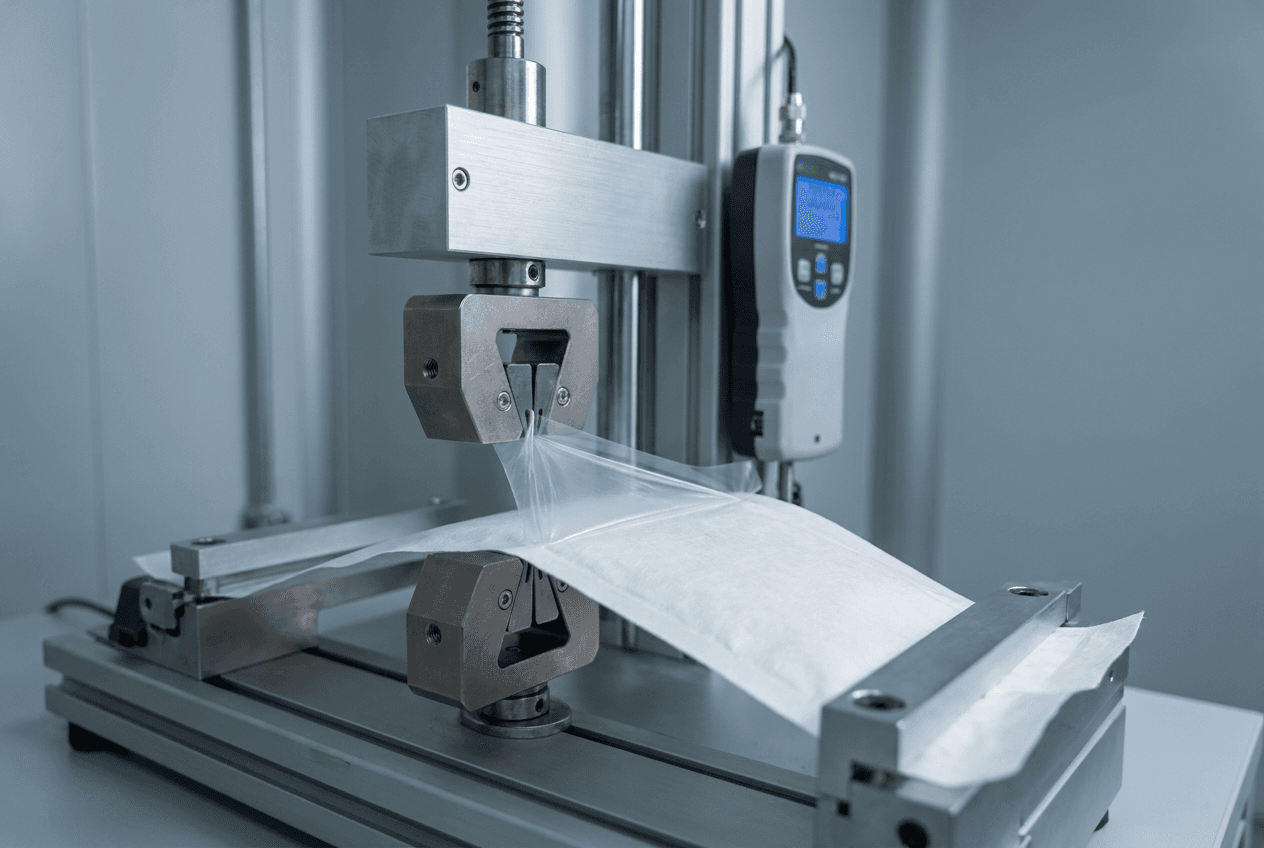
Calibrated burst tester with controlled inflation rate and pressure recording.
How It Fits Into ISO 11607
ASTM F1140 complements ASTM F88 (peel testing) in ISO 11607 validation programs by providing a whole-package strength measurement. It is particularly useful for process validation (IQ/OQ/PQ) of sealing equipment.
Learn more about ISO 11607 validation programs →Frequently Asked Questions
What is the difference between ASTM F1140 and ASTM F88?
ASTM F1140 tests the whole package by inflating it until burst, measuring overall package strength. ASTM F88 tests individual seal specimens by peeling, measuring seal strength at specific locations. Both are typically included in ISO 11607 validation programs.
Can ASTM F1140 replace seal strength testing?
No. ASTM F1140 and ASTM F88 provide complementary information. Burst testing measures overall package strength, while peel testing characterizes seal-specific performance and failure modes. Most validation protocols require both.
What is the difference between ASTM F1140 and ASTM F2054?
ASTM F1140 tests unrestrained packages — the package is inflated freely with no external support. ASTM F2054 tests restrained packages (held between plates), which more closely simulates seal stress during shipping and yields a more localized burst pressure result.
What is a typical burst pressure for a medical device pouch?
Typical burst pressures range from 1 to 5 psig depending on pouch size, material, and seal design. The acceptance criterion is set by the manufacturer based on packaging design, sealing process capability, and risk analysis.
Ready to Start Testing?
Contact us to discuss your ASTM F1140 testing requirements.
Request a Quote