Orthopedic Device Sterile Packaging Validation
Package testing designed for the unique challenges of orthopedic implants, instruments, and surgical kits.
Industry-Specific Challenges
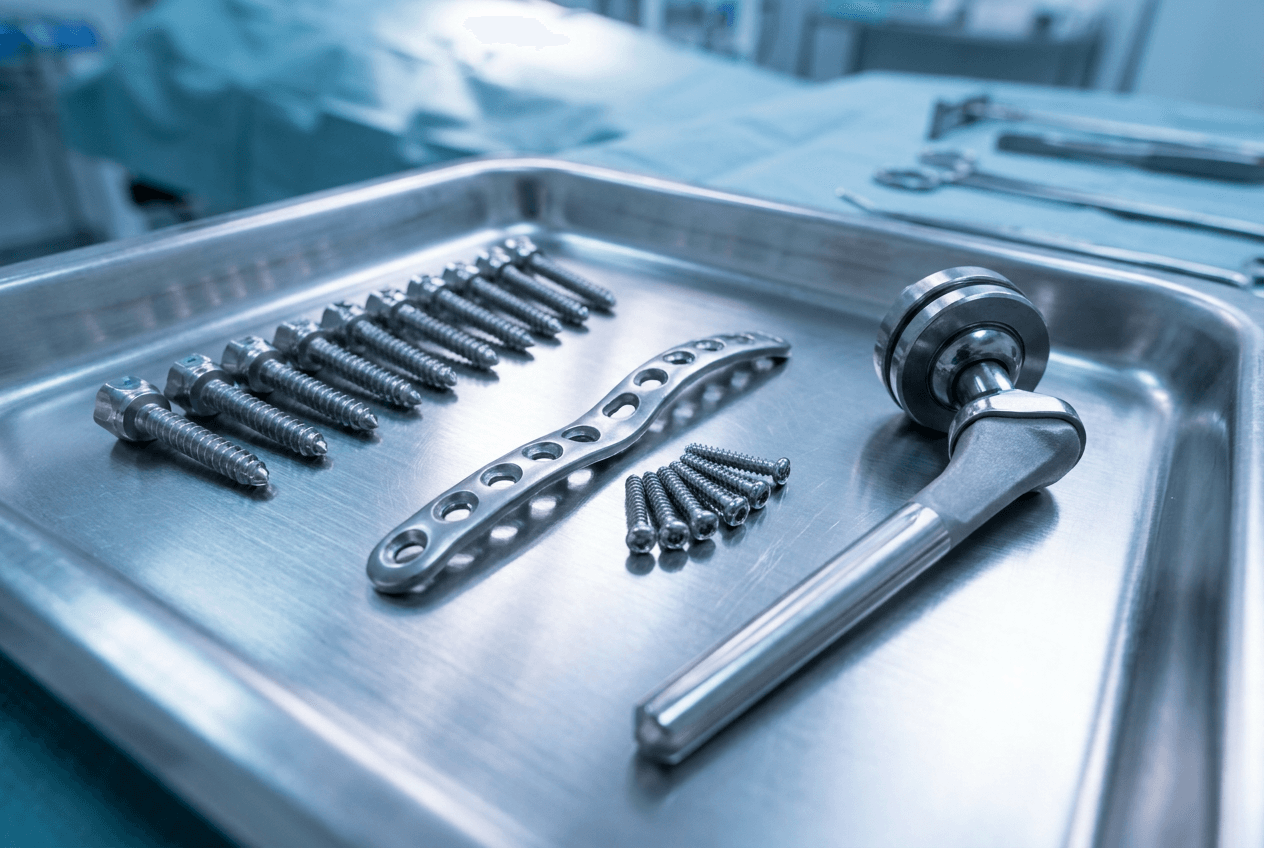
Orthopedic device packaging faces challenges that most other medical device categories do not. Heavy implants made of titanium, cobalt-chrome, or ceramic can weigh several hundred grams each, placing significant compressive and puncture stress on sterile barrier materials during distribution. Sharp edges on screws, plates, and cutting instruments can compromise seals if not properly restrained within the packaging system.
Surgical kits containing multiple components (screws, instruments, trials, implants) in a single tray require careful packaging design to prevent component movement while maintaining sterile barrier integrity. Many orthopedic manufacturers use rigid thermoformed trays with Tyvek lids, where seal width, seal strength, and tray flange design are critical quality attributes.
Distribution environments for orthopedic devices range from controlled pallet shipments to trunk stock held in sales representatives' vehicles — one of the most aggressive real-world distribution conditions in medical devices. Validation programs must account for this variability.
Relevant Test Methods
- ISTA 3A — Parcel delivery simulation for device kits and individual units
- ASTM D4169 — Distribution simulation with custom hazard levels for heavy shipments
- ASTM F1980 — Accelerated aging for shelf-life claims (typically 5 years for implants)
- ASTM F88 — Seal strength testing for Tyvek-to-tray configurations
- ASTM F1929 — Dye penetration for sterile barrier integrity verification
- ISO 11607 — Complete validation program framework
Case Study
Anonymized case study placeholder — contact us to discuss specific orthopedic device packaging validation projects we have supported.
FAQ
What packaging challenges are unique to orthopedic devices?
Orthopedic implants often have sharp edges, high weight, and complex geometries that stress sterile barrier materials. Packaging must protect against puncture, maintain seal integrity through heavy distribution loads, and accommodate devices that may include metal, ceramic, and polymer components in a single kit.
Discuss Your Orthopedic Device Packaging Validation
Tell us about your implant, instrument, or surgical kit packaging. We will propose a test plan tailored to orthopedic distribution and shelf-life requirements.
Request a Quote